
What's New
12/13/23 Publication of the Whole Mouse Brain Atlas papers
10/12/23 Publication of Human and NHP Cell Atlas papers
07/12/23 Data dashboard for BICCN data is available
NIH's Brain Research through Advancing Innovative Neurotechnologies (BRAIN) Initiative - Cell Census Network (BICCN) aims to provide researchers and the public with a comprehensive reference of the diverse cell types in human, mouse, and non-human primate brain. A network of integrated centers and laboratories including U01, RF1, and U19 data generating centers, R24 data archives, and a U24 Brain Cell Data Center (BCDC) are working collaboratively to generate, map, and share these data with the community.
A comprehensive understanding of brain cell types is essential to understand how neural circuits generate perception and complex behaviors. Identifying and characterizing brain cell types, with the means to target each cell type, will elucidate the functional interactions that give rise to the emergent properties of the central nervous system. Toward this end, the overarching goals of the BICCN are to:
- Create a high-resolution atlas of cell types in the mouse brain using large-scale single-cell transcriptomic and epigenetic analysis, as well as systematic characterization of neuronal morphology, connectivity, and electrophysiology in a wide range of brain areas.
- Generate a census of the number and location of cells for each type and develop new genetic tools that target these select cell types.
- Create an atlas of human brain cell types in the adult and in development. Profile cellular diversity in several structures relevant for neurodegeneration and neuropsychiatric disease including the hippocampus and dorsolateral prefrontal cortex, and characterize the anatomical and physiological properties of these neurons in human tissue.
- Profile cell types in non-human primates, spanning the evolutionary gap between mouse and humans and for future work on the genetics and circuits of the primate brain.
Each BICCN project contributes publicly accessible data to a multimodal classification of cell types based on transcriptomic and epigenetic, morphology and connectivity, and physiological signatures of cells.
Data, Tools, and Knowledge for Cell Types
The data generating projects associated with the BICCN and their specific cell type profiling techniques are shown below. Filled cells indicate ongoing and planned data generation in mouse, non-human primate, and human. More details for each project are available on the portal team pages.
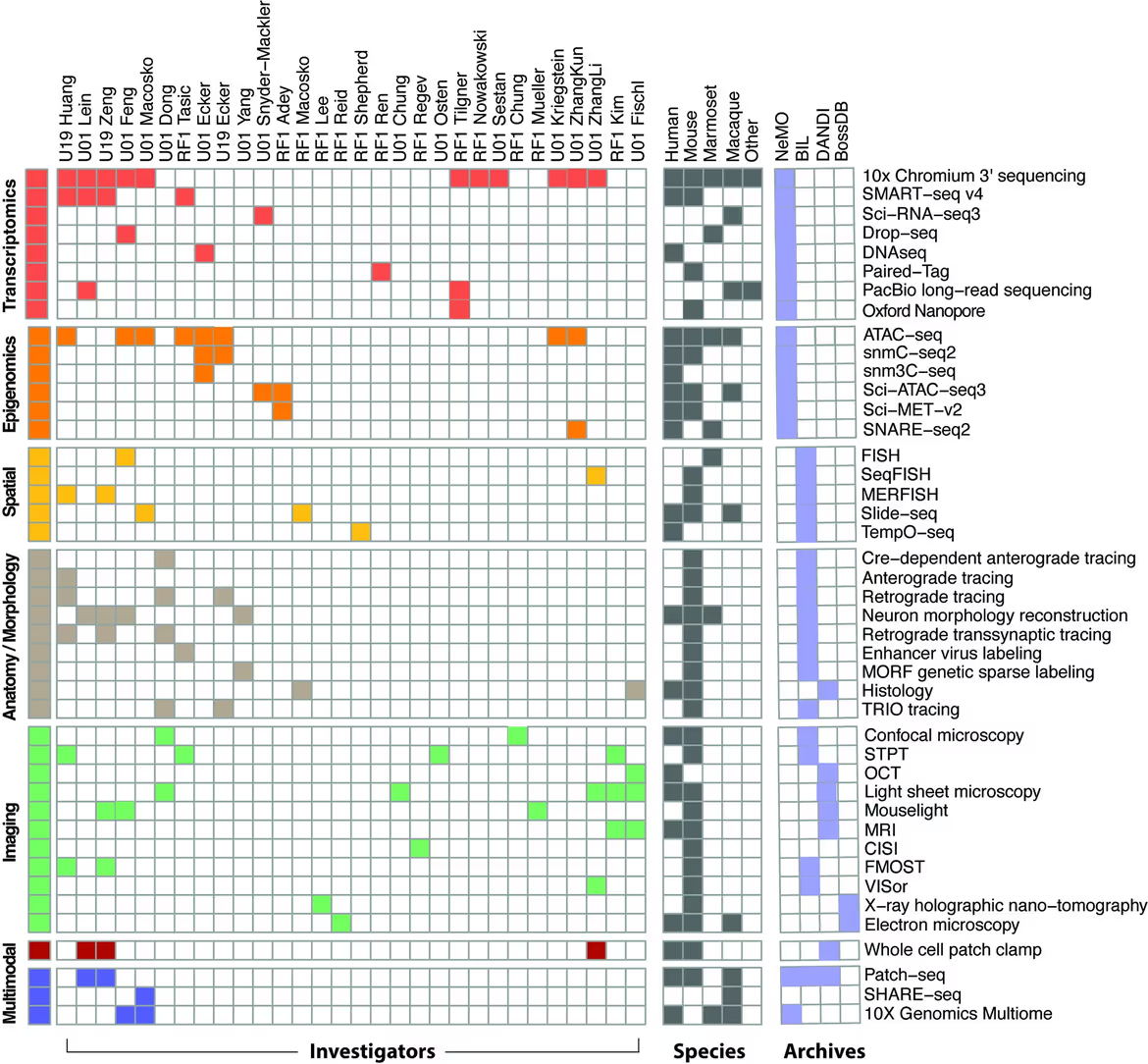
The role of the BCDC is to provide public access to and organization of the complex data, tools, and knowledge derived by the BICCN. The BICCN Portal serves as an entry point for BICCN activities and provides access to BICCN datasets stored at the R24 data archives. As our knowledge of the relationship of BICCN data modalities is uncovered, cell type summary knowledge will be presented to help enhance our understanding of the role of cell types in the brain.
All BICCN data meeting suitable quality control standards is immediately available to the public through several R24 data archives and accessible through this site. The BICCN data archives include:
- Transcriptomic and epigenomic data is available through the Neuroscience Multi-Omic (NeMo) Archive, a data repository focused on the storage and dissemination of -omic data generated from the BRAIN Initiative and related brain research projects.
- Image modality datasets are available through the Brain Image Library (BIL), a public resource enabling researchers to deposit, analyze, mine, share and interact with large brain image datasets.
- Neurophysiology data are available at DANDI: Distributed Archives for Neurophysiology Data Integration.
- Electron Microscopy and X-Ray Microtomography data are available at Brain Observatory and Storage Service (BossDB).
